Author name: Ashleigh Haskins

The position of a pelvic belt – the secret is in your hands

The position of a pelvic belt – the secret is in your hands

We all know that in seating, pelvic positioning is the key to postural alignment. It dictates the position of the trunk and head and as a result, how we use our extremities to function. Whilst we need to consider the support surfaces making contact with our body, it is often the pelvic belt offering anterior […]

The position of a pelvic belt – the secret is in your hands Read More »

Why are MAT Assessments so important when assessing for seating and mobility

Why are MAT Assessments so important when assessing for seating and mobility

A MAT assessment, or MAT evaluation, is commonly used by seating clinicians as part of the seating and mobility assessment process. But for some clinicians, it can be tempting to skip the MAT assessment as they can be time consuming, or it may be difficult to find a suitable location to conduct the assessment. But

Why are MAT Assessments so important when assessing for seating and mobility Read More »

Seat elevation: what does the evidence say?

Seat Elevation: What does the Evidence Say?

Powered seat elevation has rapidly become the most prescribed powered seat function after tilt-in-space. The benefits of seat elevation are varied, and most users of seat elevation greatly value the increase in independence and function that the feature provides. For some time, seat elevation was viewed as a ‘luxury’ addition to a power wheelchair, but

Seat Elevation: What does the Evidence Say? Read More »

Quickie iXpress in use

Choosing Between a Power Assist Device and Power Wheelchair

Over the past few months on our blog, we’ve looked at the different types of power assist devices, as well as the clinical evidence regarding their use. We are often also asked how to choose between a manual wheelchair with a power assist device and a power wheelchair, especially when considering a power assist device

Choosing Between a Power Assist Device and Power Wheelchair Read More »

Prescribing Assistive Technology for Users with Cortical Visual Impairment

Prescribing Assistive Technology for Users with Cortical Visual Impairment

As clinicians, we always consider visual impairments when assessing for and prescribing assistive technology, but if we’re honest we often treat visual impairments as a homogenous group rather than considering the specific type of visual impairment an individual may have. Considering that there are many types of visual impairments which present differently and have varying

Prescribing Assistive Technology for Users with Cortical Visual Impairment Read More »

Manual wheelchair frame

Oh what’s in a frame? Comparing aluminium, titanium, carbon fibre and magnesium

In this post we’re going to look at manual wheelchair frame materials, the most common being aluminium, titanium, carbon fibre and magnesium, and why wheelchairs are made from these materials. But before we delve into that, let’s address the first thing most people think about when they consider wheelchair frame material: weight. One of the

Oh what’s in a frame? Comparing aluminium, titanium, carbon fibre and magnesium Read More »

Power Wheelchair Controller Systems - Whats the difference

Power Wheelchair Controller Systems – What’s the difference?

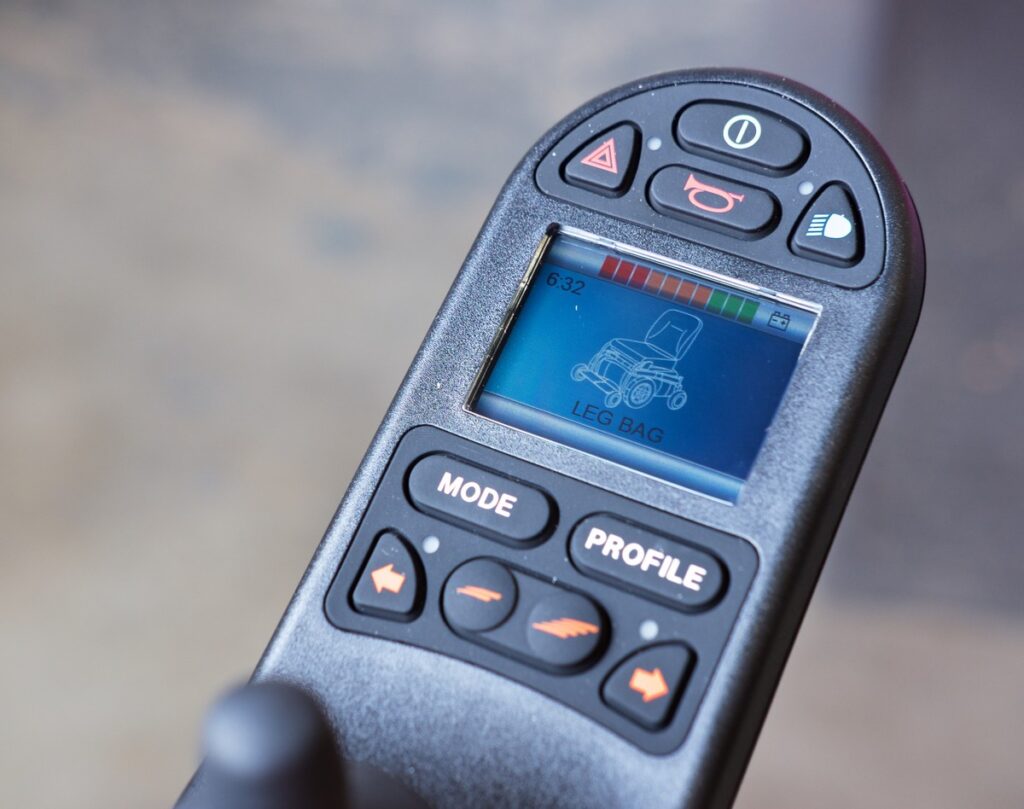
One question that the GTK consultants are often asked is what the difference is between the controller systems that different power wheelchairs use? Every power wheelchair operates on a control system, which is essentially a piece of software for your power wheelchair. The control system tells the motors and batteries how to behave, as well

Power Wheelchair Controller Systems – What’s the difference? Read More »

Tips for Introducing Powered Mobility to Children

Tips for Introducing Powered Mobility to Children

Introducing powered mobility to children can be quite daunting and is usually a nervous time for both clinicians and families. Clinicians want any introduction to be successful to maximise a child’s independence, and families usually have some concerns regarding whether powered mobility can be implemented safely. Overall, it is usually a period of excitement, and

Tips for Introducing Powered Mobility to Children Read More »

Crystal Ball Wanted…Prescribing Wheelchairs for People with Progressive Conditions

Crystal Ball Wanted…Prescribing Wheelchairs for People with Progressive Conditions

One of the hardest parts of wheelchair prescription is working out what a person needs in the wheelchair for the years to come. For most people, we need the wheelchair to last approximately five years before they have funding available for a new one, although for children their wheelchairs are often replaced much sooner as

Crystal Ball Wanted…Prescribing Wheelchairs for People with Progressive Conditions Read More »

Decision tree - power assist - feature image

A Decision Tree for Prescribing Power Assist Devices

Our last of the excellent Decision Trees developed by David Quach (Occupational Therapist, Aspire Rehab) is about scripting power assist devices. This Decision Tree helps determine what type of power assist device could be most suitable for an individual, which is very helpful considering that the different types and designs of power assist will usually

A Decision Tree for Prescribing Power Assist Devices Read More »

Decision tree - manual wheelchairs - feature image

A Decision Tree for Manual Wheelchair Prescription

Following on from the Decision Tree for Power Wheelchairs from our last blog post, in this post we have a Decision Tree for manual wheelchair prescription. The Decision trees were developed by David Quach (Occupational Therapist, Aspire Rehab), who has many years’ experience in prescribing assistive technology. Like his fantastic Decision Tree for prescribing power

A Decision Tree for Manual Wheelchair Prescription Read More »

Decision tree - power wheelchairs - feature image

A Decision Tree for Power Wheelchair Prescription

Sometimes the process of working out what type of power wheelchair is needed and what features should be considered can be daunting for therapists new to prescribing assistive technology. David Quach (Occupational Therapist, Aspire Rehab / www.aspirerehab.com.au) has developed this wonderful decision tree which prompts us on the questions that should be asked when scripting

A Decision Tree for Power Wheelchair Prescription Read More »

Starting the assessment with a blank slate

Starting the Assessment with a Blank Slate

In our increasingly busy clinical lives, it’s easy to rush through wheelchair and seating assessments, relying on information gleaned from past assessments and solely using the client’s existing equipment to determine what their future wheelchair and seating solution will look like. But one of the most important aspects of completing a thorough, high-quality wheelchair and

Starting the Assessment with a Blank Slate Read More »

Power Assist - what does the evidence say image-1

Power Assist Devices: What does the Evidence Say?

Power assist devices on manual wheelchairs are becoming more and more popular as we become aware of benefits they provide, and new options and designs become available. For manual wheelchair users, a power assist device allows them to propel with less energy expenditure, reducing the strain on the upper limbs and allowing users to extend

Power Assist Devices: What does the Evidence Say? Read More »

Power Wheelchair Controls - Proportional vs Non-Proportional image

Power Wheelchair Controls – Proportional vs Non-Proportional

Wheelchair drive controls are categorised as proportional or non-proportional. But a common question asked by therapists is what exactly does this mean? Proportional Drive Controls Proportional drive controls allow the user to move in any direction in response to the movement of the controller. For example, a standard controller is a proportional control as the

Power Wheelchair Controls – Proportional vs Non-Proportional Read More »

Elderly lady is using a wheelchair in airport

Benefits of Manual and Powered Wheelchairs

Wheelchairs increase mobility and independence for people with disabilities, enabling active participation in day to day activities. While the thought of getting one seems very straight forward, it can prove pretty confusing as the options available are bountiful. As a result, it becomes important to get acquainted with the benefits of the major types available.

Benefits of Manual and Powered Wheelchairs Read More »

Wheelchairs with electric motor in store

Power Wheelchair or Mobility Scooter – Which is Right for You?

For people who have limited mobility, mobility aids are a great relief. However, with mobility aids, people are faced with a slight yet significant dilemma – choosing the right one. In many cases, the choice is narrowed down to two options: power wheelchairs or mobility scooters. Although similar, these two mobility aids have distinguishing features

Power Wheelchair or Mobility Scooter – Which is Right for You? Read More »